Polarizing filter: Suppresses light reflections from shiny and reflective test objects
When working with light, distracting reflections in the camera image frequently occur, for example due to lubricants, films, or varnishes or simply due to reflections from shiny or reflective surfaces. To eliminate these disturbances, you can use polarizing filters.
Polarization describes the process by which light is restricted to a single direction of oscillation . There are various ways to achieve polarization for image optimization in image processing.
Polarization Using Polarizing Filters
In industrial image processing, two linear polarization filters are typically used. One is located in front of the light source, and the other in front of the lens.
The light emitted by the light source can oscillate in all directions. However, the polarizing filter in front of the light source transmits light oscillating in only one direction. All rays with other directions of polarization are blocked. If another filter is positioned in front of the lens, you can allow the polarized light to pass through or block it, depending on the setting.
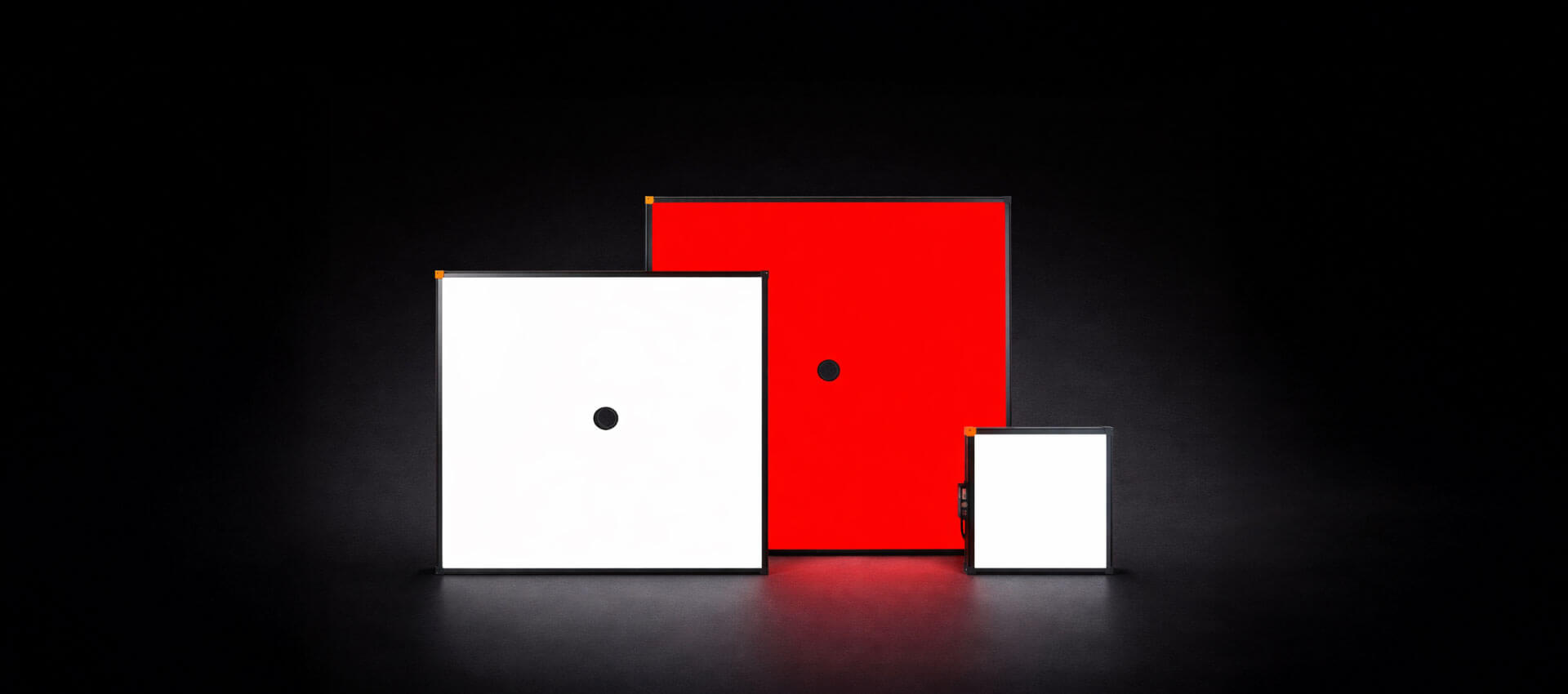
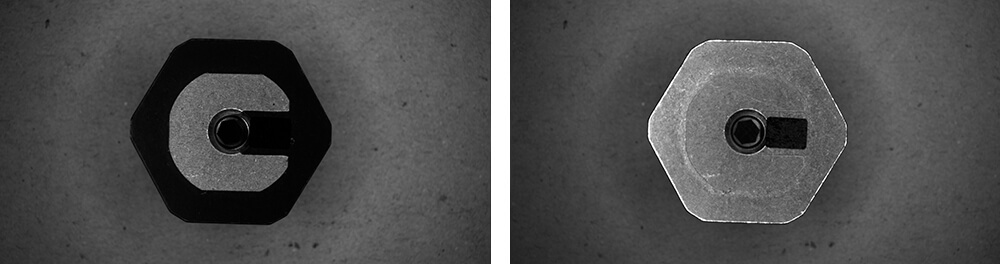
Polarised light is especially useful for suppressing distracting reflections. At the opposite end of the system – the lens – a second polarisation filter is set up as an attenuating filter. This acts to minimise reflections, and the camera image lighting is significantly more homogeneous. Since this kind of setup results in a lot of light being lost, however, working with especially powerful lighting systems – such as High Power Lighting – is strongly recommended.
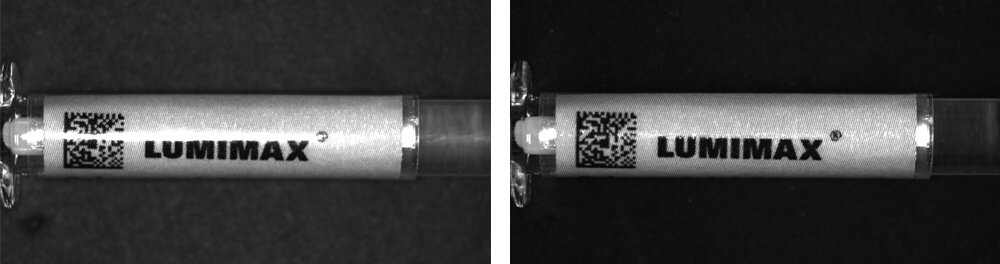
Another approach involves exploiting the surface properties of various types of objects. As just one example, this can be used to make transparent films such as adhesive pads or labels visible on metallic backgrounds. While the metallic background reflects the polarised light back into the camera, the film changes the direction of polarisation for the incident light. Accordingly, if the polarised light is blocked at the camera, only the film remains bright and can therefore be easily detected.
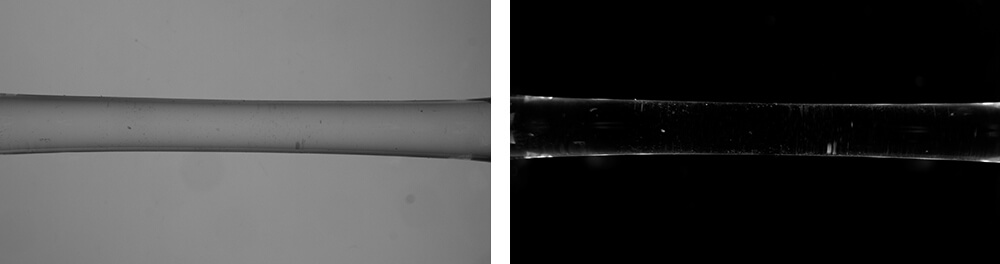
Polarised lighting is not only suited to reflected light. With a polarised backlight system, even transparent plastics and glass can be made visible. If the lens filter is configured as an attenuating filter, a dark image is first obtained. If a transparent object is present in the image, however, then this changes the oscillation direction of the light and it appears bright before the dark background. Even the arrangement of stress fractures in the objects can be identified, since these change the oscillation direction yet again.
Polarisation by the surface
If the polarisation angle – or Brewster’s angle – is taken into account, then the surface of the test object itself can actually be used to polarise the light emitted by the lighting system. If the light falls onto a non-metallic surface at this particular angle, then the reflected portion of the light will be polarised parallel to the surface. If a polarisation filter has been set up as an attenuating filter in front of the lens – i.e. rotated 90° – this can suppress distracting surface reflections.